
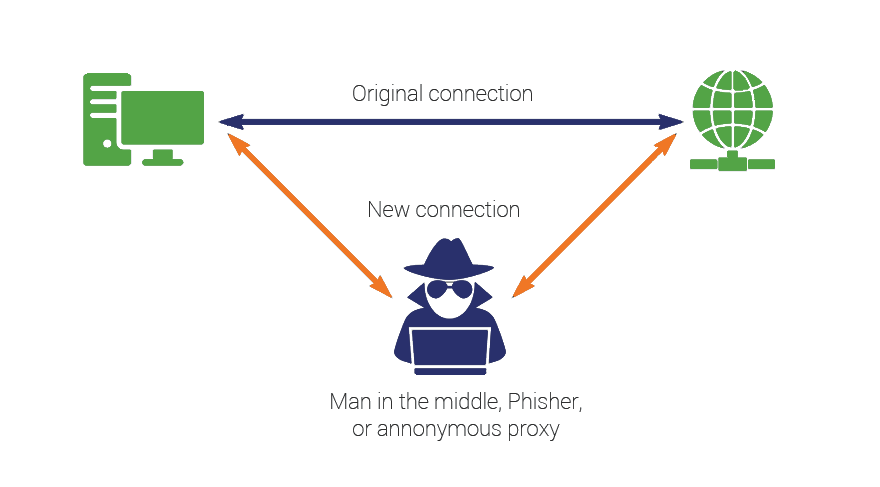
Man-in-the-Middle (MitM) Attacks: A Complete Guide
What is a Man-in-the-Middle (MitM) Attack?
A Man-in-the-Middle (MitM) attack is a dangerous cyber threat where a malicious actor secretly intercepts, relays, and potentially alters the communication between two parties who believe they are directly communicating with each other. The goal of the attacker is often to steal sensitive information such as login credentials, financial details, or personal data.
How Does It Work?
Imagine you are writing a physical letter to a bank. Instead of the postman delivering it directly, a thief intercepts the letter, opens it, reads your account details, seals it back, and then delivers it to the bank. Neither you nor the bank knows that the information has been compromised. In the digital world, this happens when an attacker inserts themselves between your device and the server you are connecting to.
Common Types of MitM Attacks:
Rogue Public Wi-Fi (Evil Twin):
Attackers set up fake, free Wi-Fi hotspots in cafes or airports. When you connect, they can see all the unencrypted traffic passing through your device.
ARP Spoofing:
The attacker links their computer's MAC address with the IP address of a legitimate user or router on a local network, allowing them to intercept data frames.
DNS Spoofing (Cache Poisoning):
The attacker alters domain name records to redirect your traffic from a legitimate website (like your bank) to a fake, malicious website that looks identical.
SSL Stripping:
The attacker downgrades your secure HTTPS connection to an insecure HTTP connection, exposing your data in plain text.
How to Protect Yourself:
Use a Virtual Private Network (VPN):
A VPN encrypts your internet traffic, making it unreadable even if an attacker manages to intercept it.
Verify HTTPS:
Always ensure the websites you visit use HTTPS (look for the padlock icon in the address bar).
Avoid Sensitive Transactions on Public Wi-Fi:
Never log into your bank account or make online purchases while connected to open, public Wi-Fi networks.
Use Two-Factor Authentication (2FA):
Even if an attacker steals your password, 2FA adds an extra layer of security that they cannot easily bypass.